
Bambu H2D Review: Is It Good for Print Farms and Production 3D Printing?
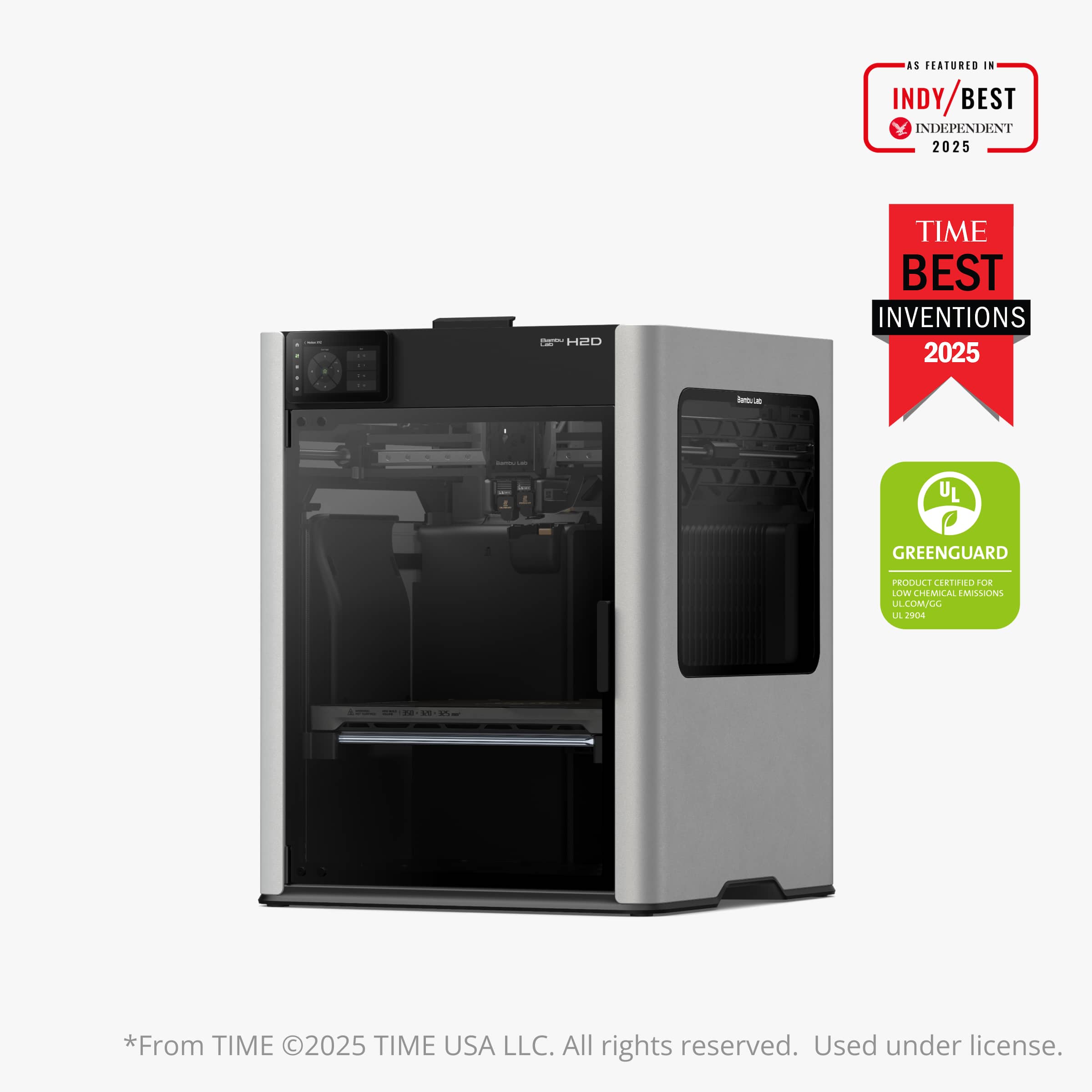
If you are looking for a Bambu H2D review from a real print farm perspective, here is the short version: the H2D is a beast of a machine, it is highly versatile, and it is genuinely impressive as an all-in-one tool. But for a serious production 3D printing workflow, that same all-in-one mentality is also what holds it back.
At JCSFY, we evaluate hardware based on how it performs inside a real operation. JCSFY is a Large-Scale Production 3D Print Farm supporting production-grade 3D printing for businesses, engineers, ecommerce brands, and product teams across the United States. We care about throughput, reliability, labor efficiency, maintenance burden, and whether a machine deserves a permanent lane in the farm.
From that angle, the Bambu H2D is a fantastic machine if it is the only machine in your warehouse, studio, or workshop. If you need one versatile tool that can print, cut, laser, and handle a wide range of projects, it makes a lot of sense. But if you are building a real print farm or production workflow, it starts to feel more like a jack of all trades than the best choice for any single high-volume job.
Our honest Bambu H2D review
The H2D is a powerful all-in-one platform, but it is not the machine we would choose as the backbone of a print farm focused primarily on 3D printing. That is the core takeaway.
The machine is versatile. It can print. It can cut. It can laser. It can cover multiple kinds of production in one footprint. On paper, that sounds excellent. In practice, once you start thinking like a print farmer instead of a hobby buyer, the tradeoffs become much more obvious.
Why the H2D is impressive
1. It really is versatile
We do not want to undersell this part. The H2D can do a lot. If you are a small shop, solo maker, or studio that wants one machine to cover multiple workflows, the H2D is genuinely attractive. That versatility is real, and it is one of the biggest reasons people are interested in it.
2. It makes sense when it is your only major machine
If the H2D is the only major tool on your workbench, it makes a lot more sense. In that kind of environment, having a machine that can handle 3D printing, laser-related work, and cutting tasks can be a major advantage. You are buying flexibility, not specialization.
That matters because not every buyer is building a 100-plus printer operation. Some people just need one serious machine that can cover a lot of ground.
3. It opens the door for mixed-use workflows
For shops that truly move between multiple fabrication methods and do not want several standalone machines right away, the H2D offers a real entry point. That part of the product story is legitimate.
Why we do not love it for print farm applications
1. The toolhead is massive, and that matters for 3D printing
One of the biggest issues in a print farm context is the toolhead size. The H2D toolhead is so large that it slows prints down compared to what we want from a machine dedicated to 3D printing. On top of that, because there are effectively two heads involved, you lose usable build volume.
That is a big deal in a farm. Print speed, usable build area, and clean batching matter every single day. If the machine gives up too much of those things, the all-in-one feature set starts to feel expensive.
2. Switching modes creates friction
Another issue is transition friction. Yes, the machine can do multiple jobs, but there is still time and effort involved in getting it ready for each one. If you are changing over from 3D printing to cutting or laser work, you are not just clicking a button and instantly living in a perfect all-in-one future. You are modifying the setup, preparing the machine, and creating more operational drag.
That might be fine in a small studio. In a production environment, those little frictions add up fast.
3. Dust and particles are a nightmare around a 3D printer
This is one of the biggest real-world issues with the H2D. If you are cutting felt, fabric, or other particle-producing materials, you now have debris floating around a machine that also needs to function as a clean 3D printer. That is not ideal. Dust and particles are a 3D printer's worst nightmare.
In a pure print farm mindset, that is a serious concern. Cleanliness matters. Reliability matters. Contamination risk matters. If a machine creates more cleanup burden before it can go back into 3D printing mode, that works directly against what we want in a farm.
4. The laser side feels subpar compared to dedicated tools
The H2D laser functionality works, but in our opinion it is subpar compared to buying a dedicated laser setup. If your real need is laser cutting, there are better tools for that. If your real need is cutting, there are better tools for that too.
That is the problem with all-in-one hardware in a production environment. Once you actually care about one specific function at a higher level, specialization usually wins.
The full laser combo issue
We bought our machine for around $3,000 and it was presented as an H2D full laser combo. Naturally, we expected the actual laser to come in the box. It did not. We had to spend extra money just to get the laser itself.
In our eyes, that is a miss. If something is labeled as a full laser combo, the expectation is that the full laser setup is included. That kind of surprise does not help the ownership experience, especially at that price point.
Who the H2D is actually for
In our view, the H2D is best for:
- Studios or workshops that want one versatile machine
- Makers who value flexibility more than specialization
- Teams that genuinely need a mixed-use fabrication tool
- People who do not already own dedicated tools for printing, cutting, and laser work
If that sounds like your situation, the H2D makes a lot more sense.
Who should probably skip the H2D
If you are building a serious print farm or buying with production specialization in mind, we would be much more cautious.
If you need all three functions at high volume, we do not think the H2D is the best answer. At that point, you are usually better off buying dedicated machines for the jobs you actually care about.
That is especially true if your main use case is 3D printing. In our shop, we would much rather have a more focused 3D printing machine plus dedicated tools for laser and cutting than force one machine to do all three at a mediocre level.
Our real buying logic
This is the simplest way to say it: if you need it for the laser, buy a laser. If you need it for cutting, buy a cutting machine. If you need it for plotting, maybe the H2D argument gets a little stronger because plotting creates less contamination risk than laser or cutting work.
But even then, our honest preference would still be a more specialized setup. We would rather own an H2S, a simple plotter, and an Xtool than rely on the H2D to cover all of those roles at once.
That is the real print farmer opinion. In production, specialization usually beats all-in-one convenience.
What this means for buyers searching for production 3D printing help
A lot of people searching for a Bambu H2D review are really trying to answer a bigger question: what is the right production setup for the kind of work they want to do? That is why this conversation matters beyond one machine review.
If you need rapid prototyping, small batch manufacturing, or high-volume 3D printing services, the answer is usually not just about the machine. It is about the workflow, the routing logic, the material strategy, and the specialization behind the scenes.
That is where a real print farm has an advantage. JCSFY supports local and national customers, including businesses looking for 3D printing in Columbus, Ohio and teams that need dependable production from a shop already built around repeatability.
Bambu H2D review FAQ
Is the Bambu H2D good for print farms?
It is not our favorite fit for a serious print farm. It is powerful and versatile, but the giant toolhead, reduced build efficiency, contamination risks, and all-in-one tradeoffs make it less appealing than specialized machines for dedicated farm use.
Is the Bambu H2D a good all-in-one machine?
Yes. If you want one machine that can do several different things and it will be one of your main tools in a studio or workshop, it is a compelling option.
Should you buy the H2D for laser cutting?
Probably not if laser cutting is the main goal. We think a dedicated laser machine is the better buy if that is the core reason you are shopping.
What is the biggest weakness of the H2D for production 3D printing?
For us, it is the all-in-one compromise. The giant toolhead slows things down, you lose usable build volume, and non-print workflows create cleanup and contamination concerns that a dedicated 3D printer does not have.
Final verdict
The Bambu H2D is a fantastic machine in the right context. If it is your only major tool, it makes a lot of sense. If you need one flexible machine that can do many things, it is impressive.
But for a real print farm application, our view is more critical. We think the H2D is too compromised by its all-in-one design to be the ideal production 3D printing machine. It is versatile, but it does not do each individual job well enough to make us prefer it over dedicated tools.
That is why our honest print farmer take is simple: the H2D is a beast, but if you are building a serious production workflow, specialization still wins.
If you want help choosing the right production path for your parts, send your files through our 3D print farm intake form. If you want a quick pricing check first, use our instant quote tool. And if you want the broader overview of how we think about scale and routing, start with our Large-Scale Production 3D Print Farm page.
If your real question is not whether the H2D is good but whether it is a better expansion buy than adding more simple fleet capacity, read Should a Growing Print Farm Buy One Bambu H2D or Multiple P1S Machines?.